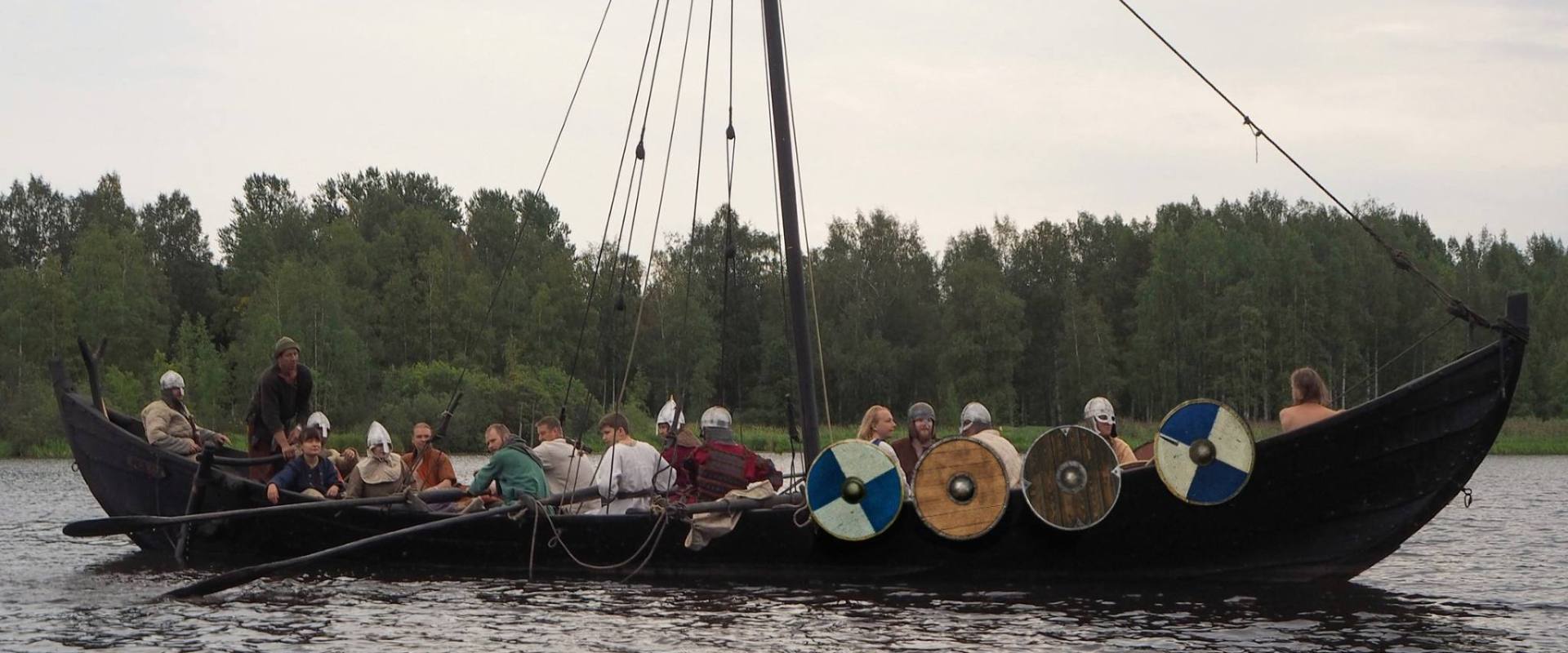
Viking Age in Finland: approx. 800-1050
Finland’s Viking history has been written mainly by foreign archaeologists and researchers. The same theme repeats itself in the writings; Finland was a poor, backward remote area that did not interest the Vikings.
However, the myriad finds of swords, (400 items), objects and graves prove that the opposite is true!
Pirkanmaa’s Tursiannotko and Vanai village in Tavastia Proper (Hämeenlinna) used to be populous, wealthy transit and trading places for eastern trade. From there along the Kokemäenjoki river to the Gulf of Bothnia, or the Mustijoki river to the Gulf of Finland (Russia, Estonia), and on the way back from there, furs, castoreum, weapons, jewelry, etc. have changed hands.
Living in the villages located deep inland in Pirkanmaa, Tavastia, was safe. A surprise attack was impossible, unline in villages and towns by the sea. In the Viking era, there were no highways in Finland, so a potential attacker had to come by boat along rivers. However, fires were lit to warn of the arrival of enemies.
In the King Sagas (Snorri, Kringla Heimsins) it is mentioned how the Norwegian Viking king Saint Olaf made a military expedition to the “coast of the Blazes“. Blazes refers to the warning fires that have been lit on the coast of Finland and along the river routes inland when the enemy has come. Olaf and his troops penetrated all the way inland, where the hostile locals beat the king’s troops and forced them to retreat.
Runestones also tell of a chief named Fröger who, assisted by his deputy Egil, led a band of robbers to Tavastia, Finland. In a confrontation with the locals, Egil was killed in Kyllönkoski, Pälkäne. On Hiidenjoki in Hämeenlinna, Fröger got an arrow in his leg. He left with his remaining troops on an escape journey, via Puujoki, along the old Viking trade route to the Gulf of Finland. There, Fröger sailed to Estonia and died of a wound he received in battle. A memorial was erected to Egil in Sweden, near Gävle. A text has been carved into the rune stone (Gs 13), where it was said that Egil fell in “i Tafstalonti”, i.e. in the narrows of Tavastia.
——————————————-
-If Finland was a poor, remote region during the Viking Age, as it is written, then why did Olaf the Holy or Fröger and their troops attack Finland if they didn’t expect to get a lot of loot?
– The hunters and countrymen of Pirkanmaa and Tavastia did not have the combat experience or proper weapons to defeat the well-equipped forces of St. Olav or Fröger. They would have been helped by the owners of the 400 swords found in the area and the top-value Ulfberht swords (31 items) who had battle experience from abroad.